

Table of Contents
- What Is a Forensic Psychologist?
- Average Forensic Psychology Salary
- Factors That Affect Forensic Psychology Salary
- Salary by Experience Level
- Best-Paying Employers for Forensic Psychologists
- How Education Impacts Your Earning Potential
- Job Outlook and Career Growth
- Tips to Increase Your Forensic Psychology Salary
- Final Thoughts
Forensic psychology salary. Forensic psychology is one of the most fascinating careers in the field of psychology. It combines mental health expertise with the legal system, allowing professionals to work alongside courts, law enforcement agencies, correctional facilities, attorneys, and government organizations. As interest in this profession continues to grow, one question consistently stands out: what is the forensic psychology salary?
The answer isn’t as simple as a single number because salaries vary depending on education, experience, location, employer, and specialization. Some professionals earn comfortable middle-class incomes, while experienced forensic psychologists working in government agencies or private consulting can earn six-figure salaries.
In this guide, we’ll explore how much forensic psychologists make, the factors that affect earnings, career growth opportunities, and practical ways to maximize your salary in this exciting profession.
What Is a Forensic Psychologist?
A forensic psychologist is a licensed psychology professional who applies psychological principles within the criminal justice and legal systems. Their work often involves evaluating criminal defendants, assessing victims, providing expert testimony in court, conducting psychological assessments, and helping attorneys better understand human behavior during legal cases. forensic psychology salary
Unlike the dramatic portrayals in television shows, forensic psychologists spend much of their time conducting interviews, writing detailed reports, reviewing evidence, and collaborating with legal professionals. Accuracy, objectivity, and ethical practice are essential because their findings can influence important legal decisions.
Many forensic psychologists also work in correctional facilities, rehabilitation centers, juvenile justice programs, universities, military organizations, or private consulting firms. Their diverse work environments create different salary opportunities depending on the type of employer and level of responsibility.
Average Forensic Psychology Salary
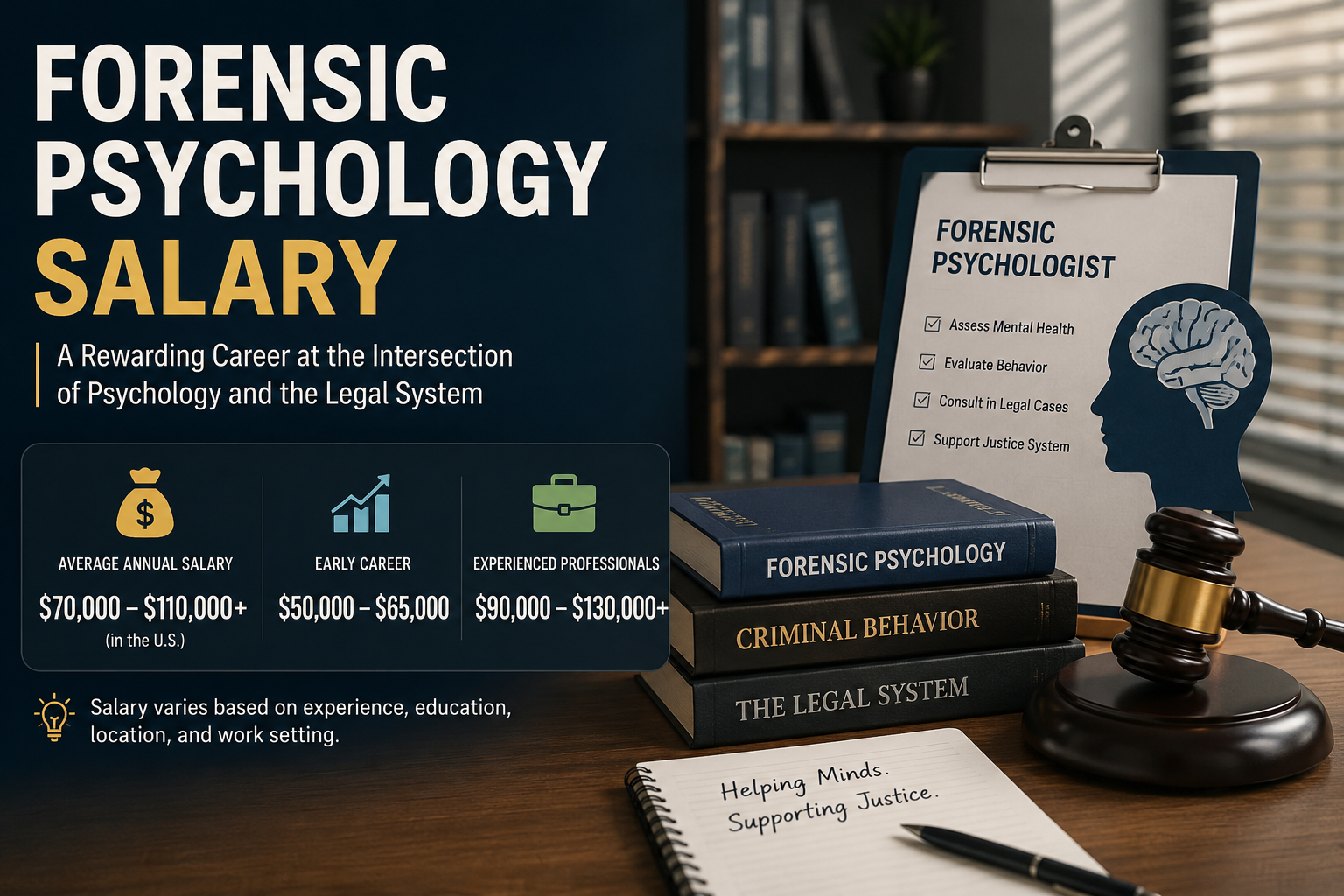
The average forensic psychology salary generally ranges between $70,000 and $120,000 per year in the United States. Entry-level professionals often begin at lower salaries, while experienced psychologists with doctoral degrees and specialized expertise can earn significantly more. forensic psychology salary
Professionals who hold a master’s degree may qualify for supporting roles, but the highest-paying forensic psychology positions typically require a Doctor of Psychology (PsyD) or a Ph.D. in Psychology, along with state licensure. These credentials open doors to advanced clinical evaluations, courtroom testimony, and private consulting opportunities.
It’s also worth noting that salary packages may include benefits such as retirement plans, paid vacation, healthcare coverage, continuing education reimbursement, and performance bonuses. These additional benefits can substantially increase the overall value of compensation beyond the base salary. forensic psychology salary
Factors That Affect Forensic Psychology Salary
Several important factors influence how much a forensic psychologist earns throughout their career. Understanding these variables can help aspiring professionals make informed decisions about education and career planning.
Education is one of the biggest salary drivers. Individuals with doctoral degrees generally qualify for higher-paying clinical and consulting positions than those with bachelor’s or master’s degrees. Specialized certifications and advanced training can further increase earning potential.
Experience also plays a major role. Early-career professionals often spend several years building expertise through supervised practice and case experience. As they gain credibility and establish professional reputations, they become eligible for leadership positions, expert witness work, and private consulting projects that offer significantly higher compensation.
Location is another important consideration. States and cities with higher living costs or greater demand for forensic psychological services often offer more competitive salaries. Government agencies, federal organizations, and metropolitan areas frequently provide higher compensation compared to smaller rural communities. forensic psychology salary
Salary by Experience Level
Experience has a direct impact on income growth in forensic psychology. Professionals usually see steady salary increases as they develop specialized knowledge and practical courtroom experience.
Entry-level forensic psychologists typically earn between $60,000 and $80,000 annually. During this stage, they focus on learning assessment procedures, completing supervised evaluations, and building professional confidence while working under experienced psychologists.
Mid-career professionals with five to ten years of experience often earn between $85,000 and $110,000 per year. They usually handle more complex cases, supervise junior staff, conduct independent evaluations, and testify in court more frequently.
Highly experienced forensic psychologists with over a decade of expertise may earn $120,000 to $180,000 or more, particularly if they operate successful private practices, consult with attorneys, teach at universities, or work with federal agencies. Their extensive experience often allows them to charge premium consulting fees and secure specialized contracts. forensic psychology salary forensic psychology salary
Best-Paying Employers for Forensic Psychologists
The organization you work for can dramatically influence your overall earnings. Different employers offer varying salary structures, benefits, and opportunities for career advancement.
Federal government agencies generally provide some of the highest salaries along with excellent retirement benefits, healthcare, and job security. Positions within the justice system, military, and federal correctional institutions are especially competitive due to attractive compensation packages.
Private consulting firms can also be highly profitable. Experienced forensic psychologists may work independently with attorneys, insurance companies, corporations, or law firms. Since consultants often charge hourly or case-based fees, annual income can exceed traditional salaries depending on workload and reputation. forensic psychology salary
Hospitals, mental health centers, correctional facilities, and universities provide stable employment with competitive salaries. While these positions may not always match private consulting income, they often include predictable schedules, strong benefits, and opportunities for research or teaching.
How Education Impacts Your Earning Potential
Education is one of the strongest predictors of salary in forensic psychology. A bachelor’s degree alone rarely qualifies someone to work as a licensed forensic psychologist, although it can provide a foundation for graduate study.
A master’s degree may open opportunities in criminal justice support, counseling, or behavioral health roles. However, many advanced forensic psychology positions still require doctoral-level education and professional licensure.
Completing a Ph.D. or PsyD significantly expands career opportunities. Doctoral graduates can perform independent psychological evaluations, diagnose mental disorders, provide expert testimony, supervise other professionals, and establish private practices. These responsibilities generally come with substantially higher earning potential over the course of a career.
Job Outlook and Career Growth
The demand for psychology professionals continues to grow as awareness of mental health increases across both healthcare and legal systems. Courts, correctional facilities, law enforcement agencies, and government organizations increasingly rely on psychological expertise to support informed legal decisions.
Technological advancements, improved forensic assessment methods, and growing interest in criminal behavior research are creating additional opportunities for qualified forensic psychologists. Professionals with specialized training in trauma, violence risk assessment, child psychology, or neuropsychology may find even greater demand for their services.
Career growth often extends beyond traditional employment. Many experienced psychologists diversify their income by teaching university courses, publishing research, conducting workshops, writing books, or providing expert consultation for legal cases. These additional income streams can significantly increase total annual earnings.
Tips to Increase Your Forensic Psychology Salary
Building a successful career in forensic psychology requires more than simply earning a degree. Strategic career decisions can have a meaningful impact on long-term income.
Continuing education helps professionals stay current with new assessment tools, legal standards, and research developments. Advanced certifications and specialized training make candidates more competitive for higher-paying positions and consulting opportunities.
Developing a strong professional network is equally valuable. Relationships with attorneys, judges, healthcare providers, and government agencies often lead to referrals, consulting projects, and expert witness opportunities that can substantially boost annual income.
Finally, consider geographic flexibility. Relocating to areas with greater demand or pursuing positions with federal agencies may result in significantly higher salaries than remaining in locations with limited employment opportunities. Professionals willing to adapt and continue learning generally enjoy the strongest long-term earning potential.
Final Thoughts
A career in forensic psychology offers far more than an attractive paycheck. It provides the opportunity to make meaningful contributions to the legal system while helping courts better understand human behavior. Although the forensic psychology salary varies based on education, experience, employer, and location, most professionals enjoy competitive compensation with excellent opportunities for career advancement.
Those who invest in advanced education, obtain professional licensure, and build expertise through years of practical experience often achieve impressive earning potential. Whether working for government agencies, hospitals, universities, correctional institutions, or private consulting firms, forensic psychologists play an essential role in modern society while benefiting from a career that is intellectually stimulating, professionally respected, and financially rewarding.
If you’re considering this career path, focus on gaining the right qualifications, developing specialized skills, and continuously expanding your knowledge. Over time, these investments can lead to both professional satisfaction and a strong long-term income in the growing field of forensic psychology.