

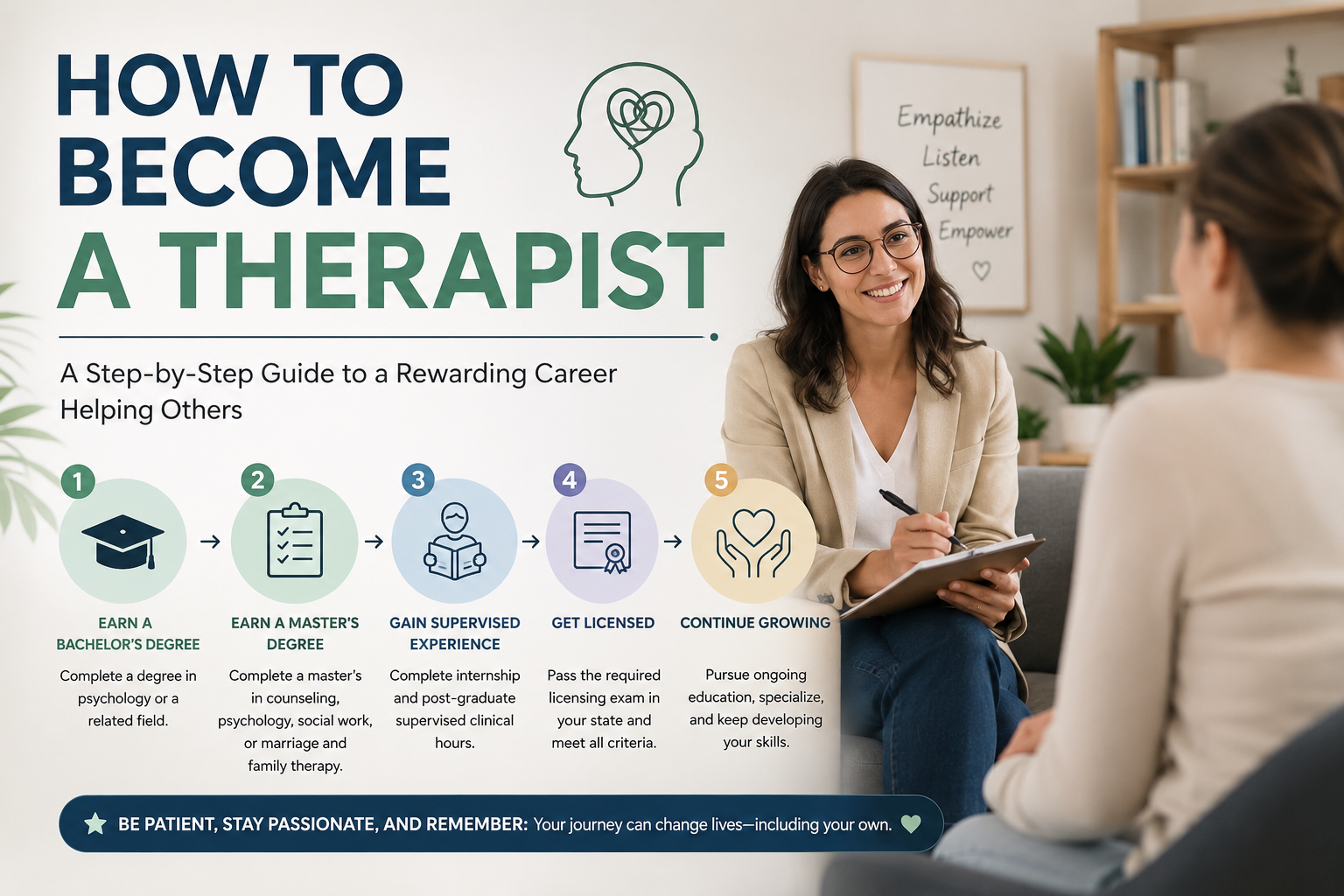
How to Become a Therapist. If you’ve ever thought about helping people overcome emotional struggles, improve their mental health, and create better lives, becoming a therapist might be the perfect career choice. Therapists play a vital role in society by supporting individuals, couples, families, and groups through life’s toughest moments. Whether someone is dealing with anxiety, depression, relationship issues, trauma, or everyday stress, therapists provide guidance, coping strategies, and emotional support that can truly change lives.
The demand for qualified therapists has increased significantly over the past few years as more people recognize the importance of mental health. With growing awareness, schools, hospitals, private clinics, and online counseling platforms are constantly searching for skilled professionals. This makes therapy not only a meaningful profession but also one with excellent long-term career opportunities. how to become a therapist
If you’re wondering how to become a therapist, the journey requires education, training, licensing, and continuous learning. While the process may seem lengthy, every step prepares you to confidently support people who trust you with their personal challenges. This guide will walk you through everything you need to know before starting your journey.
Understand What a Therapist Actually Does
Many people think therapists simply sit in a room and listen to their clients talk. While listening is certainly an important part of the job, therapy involves much more than having conversations. Therapists carefully assess emotional and behavioral concerns, identify patterns, develop treatment plans, and teach practical coping techniques that help clients make lasting improvements. how to become a therapist
Therapists specialize in different areas depending on their interests and education. Some focus on marriage and family counseling, while others work with children, teenagers, veterans, or individuals struggling with addiction. There are also therapists who specialize in trauma recovery, grief counseling, anxiety disorders, or workplace stress management.
One of the most rewarding aspects of becoming a therapist is witnessing personal growth in clients. Helping someone overcome panic attacks, rebuild relationships, or regain confidence after difficult experiences can make this profession deeply fulfilling. Every client presents unique challenges, making the work interesting and meaningful throughout your career. how to become a therapist
Choose the Right Educational Path
Education is the foundation of becoming a successful therapist. In most countries, the first step is earning a bachelor’s degree. Although psychology is one of the most common choices, students also pursue degrees in sociology, social work, education, or human services before entering graduate school. how to become a therapist
After completing your undergraduate studies, you’ll typically need a master’s degree in counseling, psychology, marriage and family therapy, or social work. Graduate programs provide advanced knowledge about human behavior, counseling techniques, mental disorders, ethics, and professional practice. Students also complete supervised internships where they gain valuable real-world experience.
Some therapists continue their education by earning doctoral degrees such as a Ph.D. or Psy.D. While a doctorate isn’t required for every therapy career, it opens additional opportunities in research, teaching, clinical psychology, and specialized private practice. Choosing the right educational path depends on your career goals and the type of therapist you hope to become. how to become a therapist
Complete Clinical Training and Supervised Experience
Classroom learning alone isn’t enough to prepare someone for therapy. That’s why supervised clinical experience is one of the most important parts of professional training. During internships and practicum placements, students begin working with real clients under the guidance of experienced licensed professionals. how to become a therapist
These supervised hours allow future therapists to develop communication skills, build confidence, learn ethical decision-making, and apply counseling theories in practical situations. Supervisors regularly review sessions, provide constructive feedback, and ensure students maintain professional standards while helping clients.
After graduating, many licensing boards require additional supervised clinical hours before granting full licensure. Depending on the location and specialty, candidates may complete several thousand hours of supervised practice. Although this stage requires patience and commitment, it significantly improves professional competence and prepares therapists for independent practice. how to become a therapist
Obtain Your Professional License
Licensing is one of the most essential steps in becoming a therapist. Without the appropriate license, you generally cannot legally provide therapy services or open a private practice. Every country and state has its own licensing requirements, so it’s important to research the regulations where you plan to work. how to become a therapist
Most licensing processes involve completing an approved graduate program, finishing supervised clinical experience, passing a licensing examination, and agreeing to follow professional ethical standards. Some licensing boards also require background checks and continuing education before renewing licenses.
Maintaining your license is an ongoing responsibility. Therapists regularly attend workshops, seminars, and training programs to stay updated on new research, treatment methods, and ethical guidelines. Continuous learning ensures therapists provide the highest quality care throughout their careers.
Develop Essential Skills Every Therapist Needs
Academic qualifications are important, but personal skills often determine how successful a therapist becomes. One of the most valuable qualities is empathy. Clients want to feel understood without being judged, and genuine empathy helps build trust from the very first session. how to become a therapist
Excellent communication skills are equally important. Therapists ask thoughtful questions, actively listen, observe body language, and explain complex emotional concepts in ways clients can easily understand. Strong communication helps create a safe environment where clients feel comfortable discussing sensitive topics.
Critical thinking, patience, emotional resilience, and problem-solving abilities also play significant roles. Therapists regularly work with individuals experiencing serious emotional distress, so remaining calm and professional during difficult situations is essential. Building these skills takes time, practice, and self-awareness.
Decide Where You Want to Work
Therapists have a wide variety of career options available after obtaining their licenses. Many begin working in hospitals, mental health clinics, rehabilitation centers, schools, universities, or nonprofit organizations. These environments provide valuable experience while allowing therapists to collaborate with other healthcare professionals. how to become a therapist
Some therapists eventually establish private practices where they manage their own schedules, choose their specialties, and build long-term client relationships. Running a private practice also involves handling business responsibilities such as scheduling appointments, marketing services, maintaining records, and managing finances.
Online therapy has become increasingly popular as technology allows therapists to connect with clients remotely. Virtual counseling offers greater flexibility for both therapists and clients while expanding access to mental health services across different regions. Many professionals now combine in-person and online sessions to reach a broader audience.
Continue Growing Throughout Your Career
The field of mental health constantly evolves as researchers discover new treatment approaches and better understand human behavior. Successful therapists embrace lifelong learning by attending conferences, completing certification programs, reading professional journals, and participating in peer consultation groups. how to become a therapist
Many therapists choose to specialize after gaining experience. Specializations such as cognitive behavioral therapy (CBT), dialectical behavior therapy (DBT), trauma-informed care, child therapy, or addiction counseling allow professionals to become experts in specific treatment areas and serve clients more effectively.
Self-care is another essential part of long-term career success. Listening to clients’ emotional struggles every day can be mentally demanding, making it important for therapists to maintain healthy boundaries, seek supervision when needed, and prioritize their own mental well-being. A healthy therapist is better equipped to help others.
Is Becoming a Therapist Worth It?
For people who genuinely enjoy helping others, becoming a therapist can be one of the most rewarding careers available. Beyond financial stability, therapists experience the satisfaction of making meaningful differences in people’s lives. Watching clients overcome obstacles, improve relationships, and regain confidence provides a level of fulfillment that many careers cannot offer. how to become a therapist
The profession also offers flexibility in terms of work environments and specialties. Whether you prefer working with children, couples, military veterans, students, or individuals facing mental health challenges, there are countless opportunities to build a career that matches your interests and strengths.
Although the educational journey requires dedication and several years of preparation, the long-term benefits often outweigh the challenges. As awareness of mental health continues growing worldwide, qualified therapists are expected to remain in high demand for many years to come.
Final Thoughts
Learning how to become a therapist involves much more than earning a degree. It requires compassion, commitment, continuous education, supervised training, licensing, and a genuine desire to improve the lives of others. Every stage of the journey helps develop the knowledge and practical skills necessary to support people facing life’s emotional and psychological challenges. how to become a therapist
If you’re passionate about mental health and enjoy building meaningful connections with others, therapy offers an incredibly rewarding career path. While becoming a licensed therapist takes time and effort, the opportunity to positively impact individuals, families, and communities makes the journey worthwhile.
Start by researching educational programs in your area, understanding local licensing requirements, and gaining experience through volunteer work or internships. With dedication, patience, and continuous learning, you can build a successful therapy career while making a lasting difference in countless lives.
If you’d like, I can also Create an SEO-optimized version with a meta title, meta description, URL slug, FAQs, and schema-friendly headings for better Google rankings.